

Cocktail Reception (by invitation)
Networking and Refreshments
09:15 – 09:45
Opening
09:45 – 11:00
Plenary Session: Multi-disciplinary Arts Districts in the 21st Century – Challenges and Opportunities
Speakers:
11:00 – 11:20
Break
11:20 – 12:35
Performing Arts Panel Discussion: Arts, Community and Leadership – Reframing the Relationship
Speakers:
Lunch
Panel Discussion
(Click the below to view more programme details)
Panel Discussion: Museums at the Crossroads: Fostering Community and Embracing Entrepreneurship
Two roundtable sessions, organised by the Hong Kong Palace Museum, explore new ideas and practices to redefine museums as spaces for community building and entrepreneurial experimentation. Leaders around the globe will illuminate how museums must lead and innovate to ensure their long-term financial sustainability and relevance to their audiences.
14:30 – 15:50
Panel Discussion (I) – Knowing Our Audiences: Shaping Community-Centred Museums
Moderator:
15:50 – 16:20
Break
16:20 – 17:30
Panel Discussion: The Role of Learning in 21st Century Museums
Museums today face unprecedented challenges – unpredictable funding, rising costs, audience disengagement, and shifting geopolitical contexts. For museums to thrive, they must be relevant to their audiences. This means embracing a new approach to learning that prioritises curiosity, plurality, interactivity, and social experiences over knowledge transmission and passive viewing.
While some may see museum learning as the work of an education team – traditional school programmes, guided tours, and workshops—twenty-first-century museum learning is about a fundamental shift in how a museum engages with its audience. In this new model, learning touches upon all facets of the organisation.
The sessions organised by M+ will explore this shift in two conversations. The first will focus on how museum learning can transform an institution while the second will examine the specific work of building community and what it means to connect with audiences today.
14:30 – 15:45
Panel Discussion (I) – Building a Community for the Museum
15:45 – 16:15
Break
16:15 – 17:30
Panel Discussion (II) – The Positioning and Value of Museum Learning
As human civilisation progresses, arts and culture have been expanding in scope and in complexity. While presenting singular form of art in a dedicated venue still goes strong for arts, more flexibility is called for in the use of space, equipment and ways of presenting contemporary arts. Moreover, artists are increasingly embracing cross-disciplinary and cross-media creations, which challenge traditional facilities designed for singular art forms. Enabling different art forms to be presented by artists and curators in a integrated approach, large-scale multi-disciplinary arts districts seem to be a solution where more room can be provided to presenting the arts with multiple options, providing even more exciting life experiences of appreciation and participation. Arts districts also offer opportunities for cultural activities and commercial events to be run complimentarily, in contrast to a clear dichotomised approach in the past. But developing and running arts districts have challenges that call for arts leaders who not only have a vision of how the space should be best used and run but also have the capability to lead, particularly when the district have to make change to address new needs. Arts leaders from different regions invited to this plenary will share their visions, thinkings and experiences.
This Panel will focus on the growing trend of museums adopting entrepreneurial approaches, blending their cultural mission with business acumen and innovation. This fusion enables museums to remain relevant and sustainable in a rapidly changing world. Leading museum directors will discuss emerging strategies to implement self-sustaining business models that support museums’ core missions while expanding their impact through unique and unconventional experiences tailored to diverse audiences. Topics will include cultural and creative industry development, and entrepreneurial partnerships.
This Panel will explore how museums come to understand their audiences and translate this knowledge into inclusive, engaging experiences that genuinely reflect the diversity of the communities they serve. Gaining insight into who current and prospective visitors are, what they need, and the motivations behind their visit—or not—guides museums in their exhibition planning, programming, marketing and outreach. Esteemed museum experts will share how audience research enables institutions to dismantle barriers and respond adeptly to evolving social trends and technologies, thereby fulfilling their mission as vibrant, community-centred organisations in today’s world.
How can we build and maintain audiences today? How do museums engage with new visitors? How can funders help build community? Whether it is building a new museum, welcoming previously excluded audiences, or re-building connections with local audiences, speakers in this panel will discuss the challenges they face in building community, as well as the surprising impacts of this work on their organisations.
What does it look like when we change how audiences, objects, and artists interact with each other? In this panel, the speakers will reflect on how their organisations define and leverage museum learning—both to build audiences and to create lasting impacts within and outside the organisation. With an understanding that learning can happen anywhere, what are the new possibilities for empowering audiences? How can we persuade visitors of all ages to participate in and ultimately value museums again?
In this rapidly changing cultural landscape and at a time of mounting public and budgetary pressure, arts leaders the world over are confronted with the challenge of addressing the shifting needs of artists, audiences, funders, and the larger community. From a centre of performance of the past to a civic hub fostering inspiration, innovation, learning and community engagement, the future is right on our doorstep. This international panel of arts leaders will explore how arts institutions reframe their relationships with their constituents, in order to stay relevant to their own places and times.
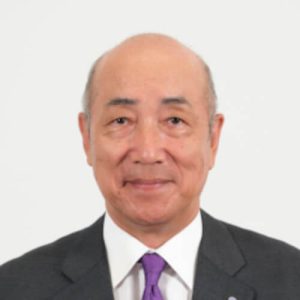
Lou Wei has been working in the Palace Museum since 1993. He is currently the Executive Deputy Director and Research Fellow of the Palace Museum, and a Board Member of the Hong Kong Palace Museum.
For many years, Lou has been engaged in museum collection management and general administration. He has been actively promoting domestic and international cooperation within the museum community and organising international exchange projects. He also made contributions to the identification and studies of ancient Chinese paintings and calligraphy.
Born in March 1976, Manuel Rabaté is a graduate of the Institut d’Etudes Politiques de Paris (Sciences Po, 1998) and HEC Business School (2001). He began his career at the Musée du Louvre, serving as Deputy Director at the auditorium from 2002 to 2005. During this period, he developed the new programme for Islamic arts as part of the museum’s first performance contract with the French government, aimed at modernising the museum.
In 2005, he joined the Musée du quai Branly, one year before its opening, as Deputy Director of Cultural Development. He established the museum’s administrative and financial structure before its opening. After the opening, he oversaw the first overseas exhibitions, including the “Masques – Beauté des Esprits” at the Bahrain National Museum in 2008.
Rabaté joined Agence France-Muséums in 2008, shortly after the signing of the intergovernmental agreement between France and the United Arab Emirates that initiated the Louvre Abu Dhabi project. Subsequently, he has followed the project from its conceptual phase through operational implementation, serving as Secretary General and acting CEO since 2010. In 2013, he was appointed CEO of Agence France Museums by the Board of Directors and Chairman Marc Ladreit de Lacharrière to manage a multidisciplinary team of museum professionals in Abu Dhabi and oversee the realisation of the project in collaboration with major French museums and UAE partners.
In September 2016, Manuel Rabaté was appointed Director of Louvre Abu Dhabi by the Abu Dhabi Tourism & Culture Authority. Beyond his roles at the museum, Manuel Rabaté has also chaired the reflection group-Culture & Management and created the museum department. He has also taught arts and cultural management at various universities in France and Abu Dhabi, including Paris-Dauphine University and Paris-Sorbonne University, Abu Dhabi, since the establishment of the Master’s programme in History of Art and Museum Studies.
Bernd Ebert has served as Director General of the Staatliche Kunstsammlungen Dresden (Dresden State Art Collections) since May 2025. In this role, he leads one of the world’s most renowned cultural institutions, encompassing 20 museums, art collections, and archives.
He began his career at the National Museums in Berlin in 2005, curating the exhibition Circle Sphere Cosmos at the Pergamon Museum. From 2007 to 2013, he served as Academic Advisor to the Director General and the Senior Officer for International Relations, coordinating research and scholarship initiatives and leading international cooperation across the collections. His work contributed to European Union-led collaborations with national museums in China, Japan, the UAE, the United States, Brazil, and Georgia.
From 2013 to 2025, Ebert was Chief Curator of Dutch and German Baroque Painting at the Alte Pinakothek in Munich, part of the Bavarian State Painting Collections. Among the major exhibitions and accompanying catalogues he co-curated and edited are Utrecht, Caravaggio and Europe (2018), Jacobus Vrel – Looking for Clues of an Enigmatic Painter (2020), and Rachel Ruysch – Nature into Art (2024).
Ebert holds a PhD in Art History from the University of Bonn with a doctoral thesis on the Dutch painters Simon (1610-1661) and Isaack Luttichuys (1616-1673). In 2011, he was a visiting fellow at the Getty Research Institute in Los Angeles. Before studying Art History, Business Economics and Law at the University of Bonn, he was a trainee at the Deutsche Bank in Dresden.
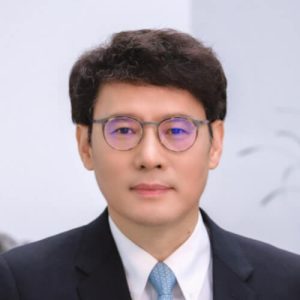
A PhD in History, Curator, Shanghai Leading Talent, and licensed national archaeological excavation team leader, Chu was appointed the Director of the Shanghai Museum in 2022. He oversees the Museum’s operations, from management and exhibition planning to international collaborations. He has been leading major projects such as the Shanghai Museum East (inaugurated in 2024), the Yangtze River Estuary No.2 Shipwreck salvage and preservation project, and the upcoming Shanghai Museum North (the Yangtze River Estuary No.2 Shipwreck Museum). Chu is at the helm of The Greater Museum Complex Programme of the Shanghai Museum, directing exhibition series including The Essence of China, Dialogue with the World, China 100, and Drawing Inspiration from the Past. Under his leadership, the Museum has held several major exhibitions, including “Botticelli to Van Gogh: Masterpieces” from the National Gallery, London, “Who is Leonardo da Vinci? Dialogue between Renaissance and Chinese Painting”, “Stars over China: The Ancient Shu Civilization of Sanxingdui and Jinsha”, and the record-breaking “On Top of the Pyramid: The Civilization of Ancient Egypt”.
With over 30 years of expertise in cultural heritage preservation, archaeology, and museums, Chu has led more than 50 archaeological excavation projects, including ancient sites, kilns, and tombs. He is also a Vice Chair of Chinese Museums Association, Member of the Leadership Group of the Shanghai Municipal Administration of Culture and Tourism, and Chair of the Shanghai Museums Association. He once served as the Director of the Ningbo Institute of Cultural Heritage and Archaeology, Director of the Ningbo Museum, Deputy Director-General of the Shanghai Municipal Administration of Culture and Tourism, and Deputy Director-General of the Shanghai Municipal Administration of Cultural Heritage.
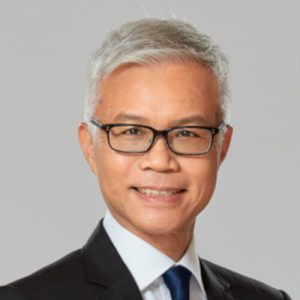
Louis Ng has been the inaugural Director of the Hong Kong Palace Museum since 2019. Ng is a seasoned museum professional, historian, and arts administrator with over thirty years of experience in museum planning and management. Previously he was Deputy Director of Leisure and Cultural Services Department, Hong Kong SAR Government, where he oversaw the operation of the department’s museums, performing arts centres and public libraries. He joined public museum services after graduation from university and was a curator at the Hong Kong Museum of History and the founding Director of the Hong Kong Museum of Coastal Defence. Later he was appointed as the Executive Secretary of the Hong Kong Antiquities and Monuments Office. He is currently an Adjunct Professor at the Chinese University of Hong Kong, an Honorary Professor at the Hong Kong Polytechnic University and a Council Member of the Hong Kong Baptist University.
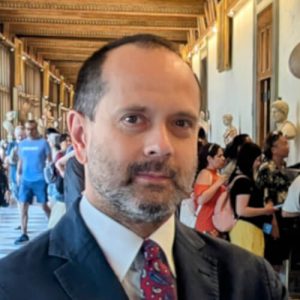
Simone Verde, former director of the Pilotta Monumental Complex in Parma, has been the director of the Uffizi Galleries in Florence since January 2024.
As former Head of Scientific Research and Publications for Louvre Abu Dhabi/Agence France-Musèum, he has been actively involved in cooperation with non-Western countries, strengthening cross-cultural engagement and contributing to international partnerships. Additionally, he has served on the Scientific Committee of the Hermitage–Italy Centre, and has provided expert services abroad, including museums in Riyadh, Saudi Arabia. He has also contributed to a UNESCO reform development report written by the Louvre in 2013, commissioned by the Presidency of the French Republic.
Verde has a degree in theoretical philosophy from Rome, a master’s degree in ancient philosophy from Paris, a diploma in art history from the École du Louvre, and a doctorate in cultural heritage anthropology from École des Hautes Études en Sciences Sociales in Paris. As an art historian and cultural anthropologist, he has curated and authored numerous exhibitions and catalogues, including “I Farnese: arte, architettura, potere” (The Farnese: Art, Architecture, Power) in 2022. He is the author of several books, including Cultura senza Capitale (Culture without Capital), Le belle arti e i selvaggi (The Fine Arts and the Savages) (2017), Voltare Pagina (Turning the Page) (2022), and La scuola del mondo (The School of the World) (2023).
Hiroyuki Shimatani is the Executive Director of the Museum of the Imperial Collections, Sannomaru Shozokan, since October 2023, and the President of the National Institutes for Cultural Heritage since April 2021.
After graduating from the Department of Fine Arts in the Faculty of Education at Tokyo University of Education, he began his professional career in 1984 as a curator in the Calligraphy Division of the Tokyo National Museum. He subsequently held several senior posts at the same museum, including Director of Cultural Properties, Director of Curatorial Research, and Executive Vice Director. From 2015 to 2023, he served as Executive Director of the Kyushu National Museum before assuming his current role.
During his tenure as a curator at the Tokyo National Museum, he organised numerous acclaimed exhibitions focusing on Japanese and Chinese calligraphy, as well as masterpieces from the collection of the Palace Museum. As President of the National Institutes for Cultural Heritage, he oversees five national museums and three national research centres and provides leadership in the conservation and public engagement of Japan’s cultural heritage.
Sharon Shaffer is an educator, author and consultant from the United States, working primarily in the museum field with an interest in children’s participation in museums. As the founding director of the Smithsonian’s lab school for young children (1988), she developed a cutting-edge model in museum-based learning that is recognised nationally and internationally (Smithsonian Early Enrichment Center). Shaffer’s work focuses on research, theory and practice related to engaging young children in museums, including babies, toddlers and preschoolers, and seeks to advocate for the rights of children as cultural citizens. As an author, Shaffer, known for her academic contributions that explore children in museums, is currently working on her fifth book with Routledge,Young Children and the Arts in Museums: Research, Theory and Practice, where she also serves as the series editor for Global Perspectives on Children in Museums. Her publications have been translated into several languages, including Chinese and Greek. Since 2004, Dr Shaffer has served as a part-time faculty member for the University of Virginia, teaching Social Foundations of Education.
Adrian Ellis is the founder of AEA Consulting (1990) and the Global Cultural Districts Network (2013). He has worked in senior management and as a board member in both museums and the performing arts and as a strategy consultant to leading clients in the cultural, public, and business sectors around the world. He is recognised as having contributed to the cultural sector’s deeper understanding of a number of areas including the development of successful cultural building projects, capitalisation needs, impact assessment, cultural district planning, the creation of new business models and investment strategies for cultural infrastructure, and strategic responses to long-term societal changes in technology, philanthropy, demographics, and the use of leisure time.
A lifelong jazz fanatic, Ellis served as Executive Director of Jazz at Lincoln Centre from 2007 to 2011. Prior to founding AEA, he planned and managed the creation of the Design Museum in London as Executive Director of Conran Foundation. He began his career as a civil servant in the UK Treasury and the Cabinet Office, where he worked on service-wide efficiency reviews and privatisation, and ran the office of the Economic Secretary to the Treasury. He is also a noted writer and speaker who has been featured in numerous distinguished forums including The Independent, The New Statesman, The Art Newspaper, The New York Times Art for Tomorrow Conference, the Salzburg Global Seminar, the Blouin Creative Leadership Summit, J. Paul Getty Trust, Clark Art Seminar, and the annual conferences of American Institute of Architects and International Society for the Performing Arts.
He is currently a board member of Poets House in New York, serves on the International Advisory Committee of the master’s program in International Arts Management, a joint program of Southern Methodist University, HEC Montreal, and Bocconi University, and is a member of the advisory board of All Arts, a multimedia platform created by public television’s WNET. He has been a Scholar in Residence at Columbia University and has taught arts administration for Boston University, New York University, National Arts Strategies, and the Clore Fellows Programme.
Ellis received his B.A. (first class) and M.A. degrees at University College, Oxford, where he served as a College Lecturer in Politics; and completed additional graduate work at London School of Economics. He is also a graduate of National Arts Strategies Chief Executive Program. In 2012, the Jazz Journalists Association named him Jazz Hero of the Year.
Lynley Crosswell was appointed Chief Executive Officer of Museums Victoria in February 2017. Museums Victoria comprises the Melbourne Museum, Scienceworks, and Immigration Museum, as well as the World Heritage-listed Royal Exhibition Building and IMAX Theatre at Melbourne Museum, attracting more than 3 million visitors each year.
Before joining Museums Victoria, Crosswell served as Chief Executive Officer of the International Division of the Australian Broadcasting Corporation and previously held senior leadership roles as Director of ABC Commercial and ABC New Media and Digital Services.
Crosswell is an experienced non-executive board director and a keynote speaker on the evolving landscape of media, arts, and science, particularly in disruptive technologies, the cultural sector, and digital business. She has served as a non-executive director of Questacon, the National Science and Technology Centre in Canberra. She is also the previous Chair of the Council of Australasian Museum Directors and continues to sit on the Executive Committee. Crosswell is also a board member of the Sovereign Hill Museums Association and a member of the World Heritage Steering Committee for the Royal Exhibition Building and Carlton Gardens.
András Szántó advises museums, foundations, educational institutions, and corporations worldwide on cultural strategy and programme development. He earned his PhD in sociology from Columbia University. A widely published author, his writings have appeared in The New York Times, Artforum, Artnet News, and The Art Newspaper, among other publications. As a consultant, he advises some of the world’s leading cultural institutions and corporate art programmes. Born in Budapest, he has curated exhibitions on Hungarian art of the 1960s and 1970s. His most recent books are The Future of the Museum (2020) and Imagining the Future Museum (2022). He lives in Brooklyn.
Carol Yinghua Lu holds a doctorate in art history from the University of Melbourne and has been Director of the Beijing Inside-Out Art Museum since 2017. She was previously Artistic Director and Senior Curator of OCAT, Shenzhen from 2012 to 2015, a guest curator at Museion, Bolzano in 2013, and China Researcher for Asia Art Archive from 2005 to 2007. She was a recipient of the ARIAH East Asia Fellowship and a Visiting Fellow in the Asia-Pacific Fellowship Program at Tate Research Centre. She was co-Artistic Director of the Gwangju Biennale in 2012 and of the 8th Yokohama Triennale with Liu Ding in 2024. She has also been a jury member for the Golden Lion Award, Venice Biennale.
Devyani Saltzman is a Canadian writer, curator and Director for Arts at the Barbican, London, responsible for leading the renewed artistic direction of the organisation with Barbican’s Heads of artforms–across cinema, creative collaboration, immersive experience, music, theatre and dance, and visual art.
Her upcoming nonfiction book, EXITING: Towards a Future of Work that Serves Us All, comes out with Random House in 2027.
Seb Chan is the Director and Chief Executive Officer of the Australian Centre for the Moving Image (ACMI), a museum focused on screen culture and the intersection of media, technology, worldbuilding, and storytelling. Prior to assuming his current role, Chan was the first Chief Experience Officer at ACMI (2015-2022) and in the museum field as a whole, playing a key role in the team behind ACMI’s expansion into a multi-award winning, multiplatform museum.
Christophe Cherix assumed the role of The David Rockefeller Director of The Museum of Modern Art (MoMA) in September 2025. He was appointed The Robert Lehman Foundation Chief Curator of Drawings and Prints at MoMA in 2013, following a departmental reorganisation that merged the Department of Prints and Illustrated Books—where he had served as Chief Curator since 2010—and the Department of Drawings. Cherix joined the Museum’s curatorial staff in July 2007 after serving as curator of the Cabinet des Estampes at the Musée d’art et d’histoire in Geneva, Switzerland. His expertise lies in modern and contemporary art, with a particular focus on the art of the 1960s and 1970s. Born in Switzerland, Cherix holds a License ès lettres from the University of Geneva.
Suhanya Raffel is the Museum Director of M+ in Hong Kong’s West Kowloon Cultural District since her appointment in 2016. She leads M+ and oversees all museum activities, including acquisitions, programming, collections care, development, research, institutional collaborations, and museum operations. Since joining M+, Raffel has defined the museum’s mission, broadening its international reach and championing its deep connection with the local community.
Karen Smith is a curator and writer focused on contemporary art practices relevant to the Chinese cultural framework. She has lived in China since 1992 and began her career as an independent practitioner. In 2012, she became the founding director of the contemporary art centre OCAT Xi’an, which she led until its closure in 2022. In 2021, Smith joined De Ying Foundation as head of academic initiatives. She currently runs the foundation’s curatorial fellowship programme.
Fatima Bintou Rassoul Sy is a curator based in Dakar, the capital of Senegal and the Programme Director at RAW Material Company (RAW), where she has been an integral part of the team since 2020. Her curatorial practice centres on archives and Black geographies, with a deep commitment to unearthing overlooked narratives and exploring how communities remember, inhabit, and reflect on their lived realities. Sy is dedicated to creating spaces that bring these stories to life—preserving collective memory and nurturing meaningful connections between people and places. At RAW, she contributes to the institution’s curatorial direction, discursive programming, and international collaborations.
Aside from RAW, Sy is also one of four guest curators for Walk&Talk — Bienal de Artes: Gestures of Abundance, a mentor for the Prince Claus Fund’s Building Beyond Fellowship Cycles 3 and 4, and an advisory contributor to the Matri-Archi(tecture) network.
Manal Ataya is a leading cultural leader and museum professional with over twenty years of experience in the cultural sector, specialising in museum development, cultural heritage management, cultural diplomacy, and institutional building. Appointed as the Founding Deputy Director of the Sharjah Museums Authority (SMA) in 2006, she played a pivotal role in establishing the organisation’s foundations and long-term vision. In 2008, she was appointed Director General, a position she held for fifteen years, overseeing a network of seventeen museums and leading a team of more than 700 staff.
Jochen Volz is General Director of the Pinacoteca de São Paulo. In 2017, he was curator of the Brazilian Pavilion for the 57th Biennale di Venezia, presenting Cinthia Marcelle–Hunting Ground, and in 2016, he was chief curator of Incerteza Viva (Live Uncertainty) at the 32nd Bienal de São Paulo. He holds a master’s degree in art history, communication, and pedagogy from Humboldt University in Berlin. He lives in São Paulo.
Paul Tam has served as Executive Director, Performing Arts of the West Kowloon Cultural District Authority (WKCDA) in Hong Kong since March 2020. In his role, Paul leads the Performing Arts Division, which oversees two flagship venues–the Xiqu Centre and Freespace–and is guiding the development of the WestK Performing Arts Centre, scheduled to open in 2027. He is responsible for shaping the Division’s strategic vision and sustainable growth, directing its artistic, programming, operational, financial, fundraising and business affairs. The Division’s portfolio embraces an extraordinary range of disciplines, from Chinese opera, theatre and dance to music and community learning initiatives.
Before joining WKCDA, Paul built a distinguished career in the performing arts, spanning symphony, ballet and literary organisations. His professional career has spanned from Toronto and Washington D.C. to Hong Kong, where he has held leadership roles including Executive Director of the Hong Kong Ballet and General Manager of the Hong Kong International Literary Festival.
Tam currently serves as Director of the International Society for the Performing Arts (ISPA), Board Member and former Chairman of the Hong Kong Arts Administrators Association (HKAAA), Governor of the Federation for Asian Cultural Promotion (FACP), and Advisor to Our Hong Kong Foundation (OHKF).
Sasapin Siriwanij is a performing arts producer, curator, and artist based in Bangkok. She holds both a Bachelor’s and Master’s degree in English from the Faculty of Arts at Chulalongkorn University. Her artistic and curatorial practices focus on the body, personal empowerment, authentic connections, social critique, and societal transformation. Since 2018, she has served as the Artistic Director of the Bangkok International Performing Arts Meeting (BIPAM), while actively pursuing an artistic and producing career in both Thailand and internationally.
Toufic Maatouk has earned global recognition for leading major ensembles such as the Romanian Radio Symphony Orchestra, Romanian Radio Chamber Orchestra, Orchestra del Teatro di San Carlo in Napoli, Orchestra Giovanile Mediterranea, Roma Sinfonietta, Orchestra Sinfonica di Sanremo, Los Angeles Sinfonietta, Korean National University of Arts Symphony Orchestra in Seoul, and Académie de l’Opéra de Paris. He made his Carnegie Hall debut in 2015 and has performed at renowned festivals and venues such as the Festival d’Île de France, Radio Romania Hall in Bucharest, and Manaus Opera in Brazil. In 2018, he was first invited to conduct at the Baalbeck International Festival—the oldest musical festival in the Middle East, set against the breathtaking backdrop of ancient Roman ruins.
In 2012, he took on the prestigious position of Artistic Director at the acclaimed Beirut Chants Festival. A year later, he became Guest Conductor with the Lebanese Philharmonic Orchestra, and in 2017, he started a yearly collaboration with the Romanian Radio Orchestra.
Maatouk has been praised for his insightful direction and consummate command of the orchestra. Opera Magazine gave him a rave review for conducting Verdi’s Requiem at the Baalbeck International Festival: “His musical sensitivity was immediately evident from the first sounds of the cellos and the care in the search for a specific and symbolic sound. Right from those first thrilling moments, one could find the nuances that brought a distinctive feature to his enlightened reading”.
The Abu Dhabi Festival, of which Maatouk has been Programming Executive Manager and Deputy Executive Director, was voted by BBC Magazine as best classical programming in the Middle East. In his role as member of the Academic Board at the Global Leaders Institute in Washington, D.C., Maatouk has been recognised for his leadership in shaping significant musical projects across the Middle East.
The conductor is renowned for his meticulous voice work with singers, especially in the Italian and French repertoires. Noteworthy performances include working with great artists such as Maria Agresta, Joyce El Khoury, Jessica Pratt and Daniela Barcellona. He conducted at the prestigious Puccini Festival in Torre del Lago and the XXVI Mese Pucciniano on the Centennial of Puccini. He debuted this year at the Tirana Opera House Orchestra & Choir in Albania. Maatouk is a jury member for prestigious competitions including the Ottavio Ziino International Lyric Competition and Voce Verdiane International Competition.
For his valuable contribution to the arts, he was knighted with the “Cavaliere dell’Ordine Della Stella d’Italia” by the President of the Italian Republic in 2020. In 2023, the French Ministry of Culture similarly bestowed upon him the title of “Chevalier des arts et des lettres”.
Maatouk studied conducting under Ennio Nicotra and Donato Renzetti. He holds a Ph.D. in Musicology from the Pontificio Istituto di Musica Sacra in Rome and has various publications with Éditions Geuthner in France. He has recorded 13 albums focusing on Maronite liturgical compositions, aiming to preserve this ancient musical tradition.
Lately, Maatouk made his debut at the Abu Dhabi Festival, conducted Donizetti’s Rita at the Bucharest Opera Festival, and led a new production of Carmen at the Baalbeck International Festival. Upcoming engagements include his debut with the Qatar Philharmonic Orchestra in May 2026, among several other projects.
Rachid Ouramdane is one of the leading figures of contemporary dance in France and internationally. His choreographic work explores the relationships between movement, space, and social realities, with a keen attention to individual narratives and collective dynamics. Trained outside traditional academic pathways, he developed an early practice rooted in urban cultures and site-specific performance, shaping a distinctive choreographic language characterised by precision, clarity, and responsiveness to context. At the crossroads of dance, documentary, and visual arts, his creations often integrate testimonies, images, and scenographic devices as essential materials.
Most of his projects emerge from close collaborations with artists across disciplines—dancers, acrobats, musicians, filmmakers, and researchers—and through encounters with diverse communities. This collective approach gives his work a strong human and political resonance while leaving space for a sensitive and immersive audience experience.
Since 2021, Ouramdane has served as Director of Chaillot – Théâtre national de la Danse in Paris, where he has developed an artistic and cultural vision based on openness, diversity, and accessibility. Under his leadership, Chaillot has strengthened its international partnerships and fostered hybrid, site-specific, and public-space projects.
Ouramdane’s large-scale works include Möbius Morphosis, presented at the Panthéon in Paris with a score by Jean-Benoît Dunckel (AIR); Vertige, an immersive performance at the Grand Palais; and his contribution to the opening ceremony of the Paris 2024 Olympic Games. He collaborates regularly with leading international companies such as the Ballet du Grand Théâtre de Genève, Candoco Dance Company, Ballet de l’Opéra de Lyon, Ballet national de Lorraine, the collective XY, Ballet de l’Opéra de Tunis, Moscow City Ballet, and the Maîtrise de Radio France.
Ouramdane has long developed an ethical approach to creation, emphasising care and inclusion. Vulnerable or culturally marginalised communities are considered full partners in the creative process, not mere subjects or materials. At Chaillot, this philosophy is realised through workshops, residencies, participatory projects, and collaborations with social and educational organisations, making dance a tool for social connection, empowerment, and cultural rights.
In March 2022, Ouramdane was named Officer of the Ordre des Arts et des Lettres, in recognition of his artistic achievements and enduring influence on the contemporary dance scene.
Sir Alistair Spalding (born 25 August 1957) is Artistic Director and Chief Executive of Sadler’s Wells, a role he has held since 2004.
Under Spalding, Sadler’s Wells has become a world leader in contemporary dance. With three London theatres, a digital platform and productions that tour globally, Sadler’s Wells presents a highly ambitious programme of cutting-edge dance and high quality entertainment. It creates bold new productions and hosts world class international companies and artists including Tanztheater Wuppertal Pina Bausch, Alvin Ailey American Dance Theater, Cloud Gate Dance Theatre of Taiwan and Rosas.
Spalding has driven the production of more than 130 shows, which have been seen at Sadler’s Wells and at venues across the world. Celebrated productions include Sidi Larbi Cherkaoui’s Sutra, Crystal Pite’s Polaris, William Forsythe’s A Quiet Evening of Dance, and Kate Prince and Sting’s Message in a Bottle. On Sadler’s Wells Digital Stage, works include Sadler’s Wells’ production of Pina Bausch’s Rite of Spring featuring African dancers, filmed on a beach in Senegal at sunset, for Dancing at Dusk.
In 2012 Spalding announced his ambition for a new venue for Sadler’s Wells, to support artists and the creation of new work, and widen access to dance. Sadler’s Wells East opens in Queen Elizabeth Olympic Park in Stratford, east London, in 2024. It features a Hip Hop Theatre Academy, a Choreographic School, a theatre, dance studios, and a large open foyer that can be used by everyone as a meeting or performance space.
Spalding’s career began at the Hawth Theatre, Crawley. He was Head of Dance and Performance at the Southbank Centre in London from 1994-2000. He has led programming at Sadler’s Wells since February 2000 when he joined as Director of Programming, before becoming Artistic Director and Chief Executive in October 2004.
As well as accolades for Sadler’s Wells productions, Spalding’s personal awards and recognitions include being appointed as a national member of the Arts Council of England Board in January 2009. He was a member of the Arts Council England Dance Advisory Panel between 1995 and 2003. He was awarded Le Chevalier des Artes et Lettres by the French Embassy in October 2005. In 2012 he was appointed a Commander of the Order of the British Empire (CBE) in the Queen’s Birthday honours list and he was awarded an honorary doctorate from Middlesex University. He received a Lifetime Achievement Award from the International Performing Arts Society in 2019. He was knighted in the 2022 New Year’s honours list for services to dance.
In February 2025, Spalding realised a long-held ambition to open a fourth Sadler’s Wells stage and opened Sadler’s Wells East, the only theatre on East Bank–a vibrant cultural hub in London’s Queen Elizabeth Olympic Park. Less than a year after opening, Sadler’s Wells East was nominated for ‘Theatre Building of the Year’ at The Stage Awards.
Betty Fung was appointed by the Board as Chief Executive Officer of WKCDA with effect from 15 October 2021.
She joined the Administrative Service of the Hong Kong Government in 1986. Since then, she had served in various bureaux and departments, including as Press Secretary to Chief Secretary and Financial Secretary, Assistant Director of Trade, Deputy Government Chief Information Officer and Deputy Secretary for Education and Manpower.
In 2007, Fung was appointed Director of Information Services who was the Government’s chief advisor on public relations and publicity matters. She was appointed Director of Leisure and Cultural Services from 2009 to 2014 to oversee the development and management of cultural, sports and recreation facilities in Hong Kong including museums, public libraries and performing arts venues. As Permanent Secretary for Home Affairs from July 2014 to April 2018, she oversaw the formulation of culture, sports and district administration policies and was actively involved in the implementation of the WKCD project and the planning of the Kai Tak Sports Park project.
Fung was Head, Policy Innovation and Co-ordination Office from April 2018 to November 2020 prior to her secondment to WKCDA as Acting CEO between December 2020 and June 2021.
Fung has been awarded the Chevalier de l’Ordre National du Mérite for her contributions towards fostering cultural cooperation and exchange between France and Hong Kong. She has been serving on the Executive Committee of the Association of Asia Pacific Performing Arts Centres (AAPPAC) as member since 2023 and elected as Deputy Chairperson for the 2026-2028 term.
Elaine Bedell OBE has served as the CEO of the Southbank Centre—the UK’s largest multi-arts centre and Europe’s biggest creative hub—since 2017. The iconic 11-acre site in the heart of London encompasses the Royal Festival Hall, Queen Elizabeth Hall, Purcell Room, the Hayward Gallery, and the National Poetry Library. Under her leadership, the Centre acts as a platform for world-class international programming while remaining a vital space for local community groups, associate artists, and six resident orchestras. The Southbank Centre currently engages the most diverse audiences of any performing arts organisation in the UK.
As the first female CEO in the Southbank Centre’s history, Bedell’s guiding principle is rooted in the legacy of the 1951 Festival of Britain: the belief that arts, ideas, and culture should be accessible to everyone. To uphold this commitment, she protects the investment required to provide over 45% of events for free for the Centre’s 3.1 million annual visitors.
Bedell’s dedication to culture and the creative industries has defined her entire career. Prior to her current role, she held high-profile positions in television, including Controller of Entertainment at the BBC; Director of Entertainment and Comedy at ITV and Executive Chair of the Edinburgh TV Festival.
Her broader influence in the arts includes previous work at the RSC and service as a Trustee of the V&A. Today, she continues to shape the industry as a member of the UK Council, the Advisory Board to Creative UK, and as a Trustee of The Yard Theatre.
Her contributions have been widely recognised; she is a BAFTA and British Comedy Award winner, and she was awarded an OBE in the 2024 New Year’s Honours for Services to Business and the Arts.
Mariët Westermann is the Director and CEO of the Solomon R. Guggenheim Museum and Foundation, directing its flagship museum in New York, overseeing the Foundation and the Peggy Guggenheim Collection in Venice, and providing collaborative leadership at the Guggenheim Museum Bilbao and the Guggenheim Abu Dhabi.
Westermann most recently led NYU Abu Dhabi, a degree-granting campus of NYU, as Vice Chancellor, having been the institution’s founding Provost from 2007 to 2010. She has also served as Executive Vice President of the Mellon Foundation, Director of NYU’s Institute of Fine Arts, Associate Director at the Clark Art Institute, and a faculty member at Rutgers University. She earned a BA at Williams College and an MA and PhD at the Institute of Fine Arts.
Westermann publishes widely on Netherlandish painting, the anthropology of art, museums, and higher education. She serves on the boards of ALIPH, the Rijksmuseum, and the American Academy in Rome and chairs the Scholar Rescue Fund of the Institute of International Education.
The Ministry of Culture of the Kingdom of Saudi Arabia has appointed Douglas Gautier as CEO of the Royal Arts Complex at King Salman Park in Riyadh Region. Gautier assumes responsibilities for managing and operating the complex and developing its cultural programs, drawing upon his extensive global experience in managing cultural assets.
This appointment aligns with the ongoing development of the Royal Arts Complex in King Salman Park, at the heart of Riyadh. Designed as a dynamic cultural landmark, the complex fosters creativity, unites diverse artistic expressions, and promotes cultural dialogue. It aims to provide exceptional experiences in an engaging environment that reflects the Kingdom of Saudi Arabia’s cultural aspirations while attracting local and international audiences.
The complex spans an area exceeding 500,000 square meters and includes seven key cultural assets: the Museum of World Cultures, the National Theatre, the Arts Library, the Arts Cinema, the Sculpture Pavilion, the Dome, and the Royal Institute of Traditional Arts. These assets are designed to offer a comprehensive cultural experience that embraces diverse art forms and enriches the Kingdom’s cultural landscape.
Gautier oversees the complex’s development, focusing on finalizing operational plans and managing its programs and cultural content. He brings over four decades of experience in managing cultural institutions, during which he led projects that have contributed to the development of the global artistic landscape throughout his professional career in Asia and Australia. He has played a significant role in launching innovative initiatives that foster cross-cultural dialogue and contribute to the expansion of artistic exchange.
Gautier has served as CEO and Artistic Director of the Adelaide Festival Centre in Australia, where he founded the OzAsia Festival, now recognized as a leading platform for cultural exchange between Australia and Asia. He is recognized for his dedication to broadening access to the arts through innovative cultural programs rooted in diversity and creativity, and for his efforts to strengthen international partnerships that foster global cultural exchange. He has chaired the Association of Asia Pacific Performing Arts Centres (AAPPAC) in 2013.
Douglas Gautier joined the Royal Arts Complex at this pivotal stage of cultural development in the Kingdom of Saudi Arabia. This project represents a unique opportunity to contribute to a global cultural dialogue celebrating Saudi heritage and international artistic achievements. He aims to collaborate with esteemed artists, curators, and cultural leaders from the Kingdom of Saudi Arabia and across the globe to realize this ambitious vision.
The Royal Arts Complex comes as part of the objectives of Saudi Vision 2030, serving as a key pillar in advancing the artistic landscape, supporting the creative economy, and fostering new opportunities for artists and cultural enthusiasts. It plays a vital role in establishing a comprehensive and globally connected cultural ecosystem. It also marks a significant milestone in the Saudi cultural landscape and encourage local and international creativity.